
How ecommerce brands cut product returns by 30% with AI-guided discovery
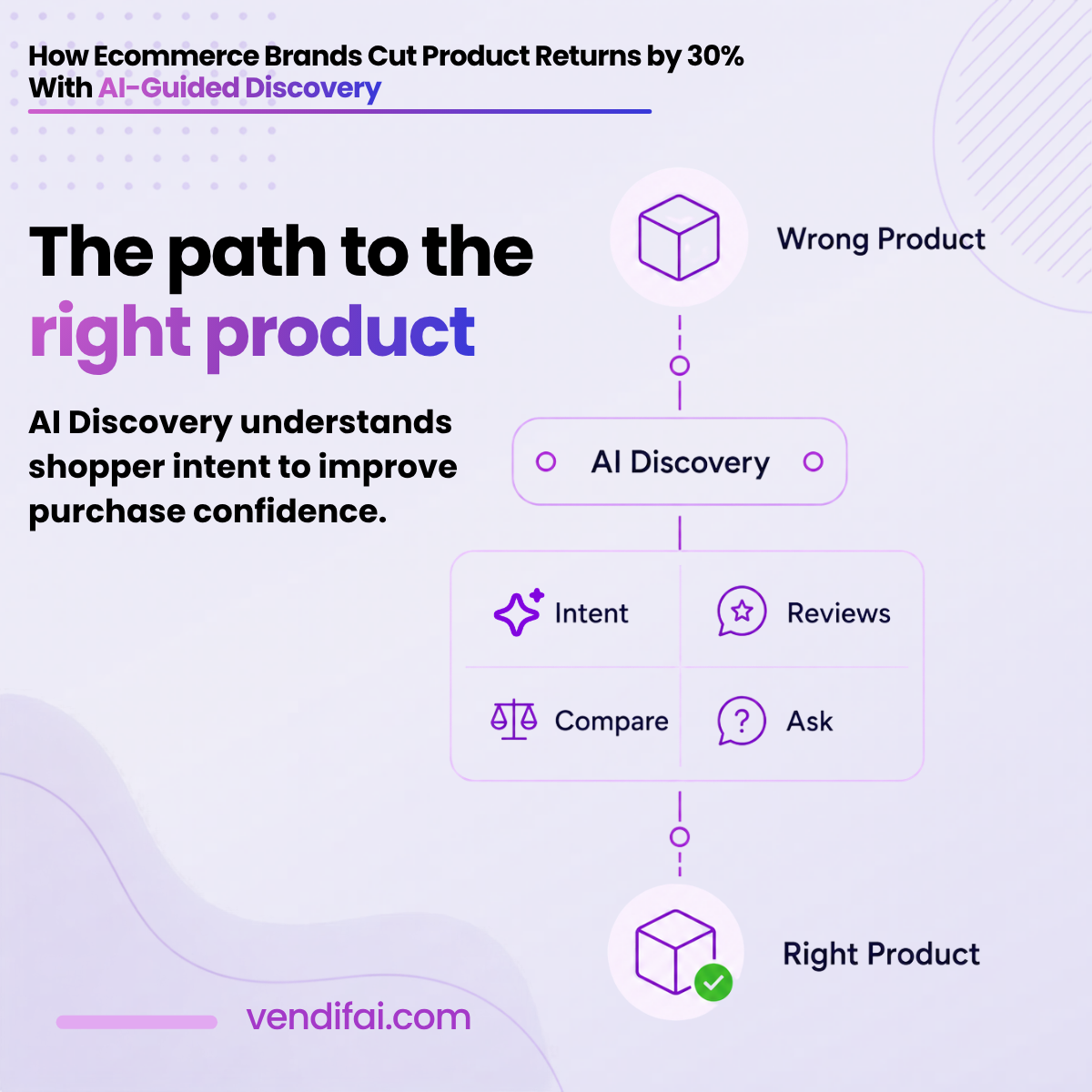
Product returns are one of the biggest hidden costs in ecommerce. Logistics, restocking, customer service, and lost resale value add up quickly. Most returns happen because shoppers buy the wrong product. The pre-purchase experience fails to help them make the right choice. AI-guided product discovery addresses this issue directly, and the results are clear. Brands that use intent-driven discovery and review intelligence consistently report lower return rates.
Why shoppers return products
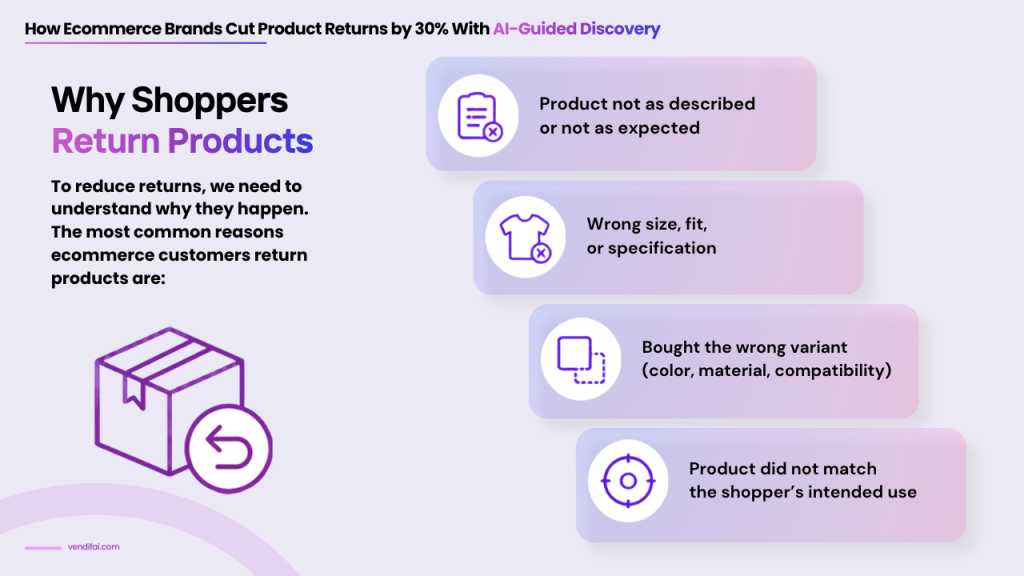
To reduce returns, we need to understand why they happen. The most common reasons ecommerce customers return products are:
- Product not as described or not as expected
- Wrong size, fit, or specification
- Bought the wrong variant (color, material, compatibility)
- Product did not match the shopper’s intended use
Ecommerce brands cut product returns
How AI product discovery addresses each return driver
Each of these reasons stems from a failure in the discovery process. The shopper found a product, but not the right one, and the experience didn’t provide enough guidance to prevent errors.
VendifAI’s Shopping Companion solves this by asking thoughtful, context-aware questions before the shopper makes a purchase. Instead of letting customers add a product to their cart based on just one image and a short description, the Shopping Companion discovers the shopper’s actual needs, purpose of visit, budget, specific requirements, and narrows down the product options to genuinely relevant choices.
The What Customers Say feature adds a vital layer of social proof during the decision-making stage. Instead of just showing raw reviews, it organizes insights from previous customers, highlighting what they valued and what they felt was lacking. This makes the insights directly relevant to the current shopper’s questions.
What the data shows?
Across ecommerce implementations of AI-guided discovery, return rate patterns shift in three notable ways:
| Return Driver | Traditional experience | AI-Guided Discovery Outcome |
|---|---|---|
| Product not as expected | Common, description rarely matches need | Reduced, intent discovery aligns expectation | Wrong size/specification | Frequent, shopper guesses | Reduced, intelligent follow-up confirms fit |
| Wrong use case match | Very common for technical products | Reduced, Shopping Companion qualifies need |
| Buyer's remorse / uncertainty | High for high-value items | Reduced, What Customers Say builds confidence |
| Wrong variant purchased | Common with complex options | Reduced, dynamic comparison surfaces key differences |
The Real Cost of High Return Rates Reducing return rates is not just a win for operations; it also boosts net revenue and profit margins. A 5% reduction in return rate for a store with £2 million in annual revenue can mean £100,000 in recovered margins when you consider logistics, restocking, customer service contacts, and inventory write-downs. Investing in AI product discovery that cuts return pays for itself quickly in operational cost savings, not to mention the benefits from improved conversion rates.
Practical steps to reduce returns with AI discovery
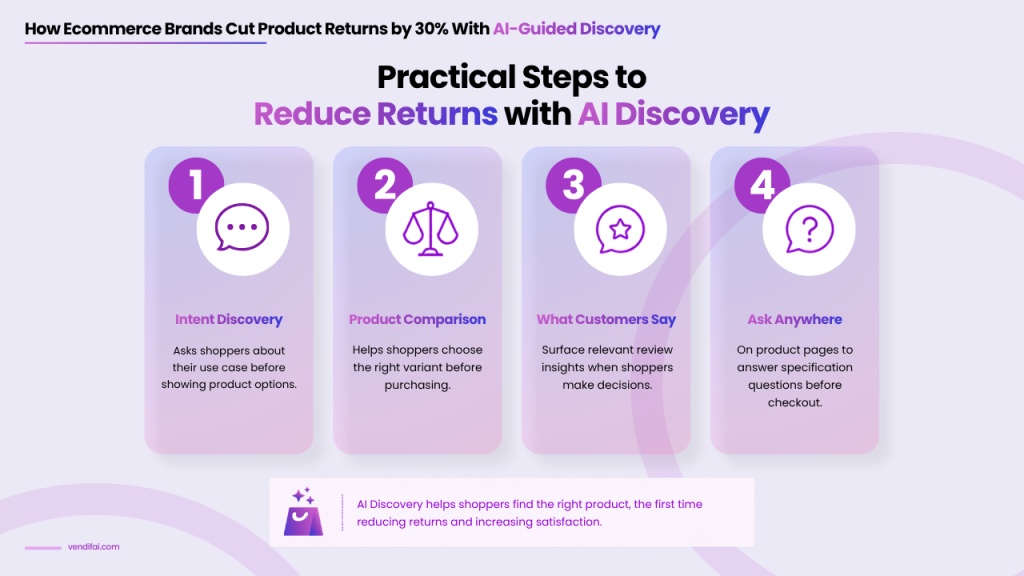
- Enable intent discovery; ask shoppers about their use case before showing product options.
- Activate dynamic product comparison; help shoppers choose the right variant before purchasing.
- Implement What Customers Say; surface relevant review insights when shoppers make decisions.
- Use Ask Anywhere on product pages; answer specification questions before checkout.
- Monitor return rates by discovery source; compare return rates for AI-assisted purchases against unassisted ones.
Ecommerce brands cut product returns
Frequently Asked Questions (FAQs)
It guides shoppers to the right product through intent discovery, intelligent follow-up questions, dynamic comparison, and review intelligence. This cuts down the mismatch between what a shopper expects and what they receive.
The main cause is a failure in the discovery process. Shoppers buy products that don’t really meet their needs because the pre-purchase experience lacks enough guidance. Better AI product discovery helps reduce this mismatch
Yes. With fewer customers returning products, brands save on reverse logistics, restocking, customer service contacts, and inventory write-downs. These savings often exceed the revenue boost from improved conversion rates.